Author: admin

  • Video Unit Summary

    Much like the other units, I learned a lot of the technical terms and standards for filmmaking concepts. I had already known about and noticed many of these concepts when watching TV and movies. However, the first part of the unit was filled with great information from Roger Ebert that helped solidify those concepts and techniques as explained in my reflection. The examples and compilations were great practice to see how experts actually use the techniques in a meaningful way.

    The thing that was harder than expected was the video assignments. The main thing that was difficult about was trying to come up with good ideas for the available assignments. After that got done, the next hill was actually doing them. I think it was just bad timing because of the weather and the conditions of the store when filming the assignments. I picked Friday and Saturday night, the two busiest nights, to try to film the commercial. After getting interrupted many times by customers, orders, and the phone, I was finally able to get all of my shots.

    The thing that was easier than expected was coming up with the idea for the character story assignment. I had already made a few things that feature The Midnight Rider. Being able to edit and use the videos that I have taken while riding felt very rewarding. It is nice to look back on the cool or unexpected moments that can happen on a ride and be able to make something interesting out of them. Coming up with a new story to tell was fun and refreshing compared to the other assignments like the blooper reel.

    Speaking of the bloopers, that assignment is what drove me crazy. The store was 85 degrees not factoring in the heat coming off of the oven when standing next to it. Trying to remember lines while standing next to the deafening oven while sweating like a pig was a new experience. I was saying the lines in my head, but they just would not come out into words on video.

    The thing I enjoyed the most was surprisingly the look, listen, analyze assignment. I have never intentionally watched a scene without sound to analyze the filmmaking techniques. It was a fun and interesting way to think more deeply about why those film design choices were made. Then the audio only play through to hear how the audio was deliberately placed to enhance the scene. Taking the individual steps made the scene have more of an impact when putting it back together and watching with audio and visual.
  • How to Read a Movie

    Roger Ebert’s essay introduced quite a few new ideas to me about filmmaking and the different methods that make it effective. His explanation on his “shot at a time” sessions was an interesting way to analyze film. Ebert describes that one does not need to be a film expert to effectively break down film. The method is to pause the film analyze wat is on screen. Ebert describes some of the general rules used in filmmaking and how they effect the consumer’s perspective on the film.

    The video compiling clips from Stanley Kubrick movies using a one-point perspective gave an interesting view on the director’s reoccurring filmmaking choice. I never realized just how many scenes Kubrick shot with a fixed camera position capturing what is happening in the scene. It makes the watcher feel like a fly on the wall of the actual scene instead of just watching it on a screen. Kubrick also does a variation of this shot often where the camera will move like it is attached to a certain character or object to keep it in the same part of the frame. It makes it feel like the you are following the character through the scene.

    Quinten Tarantino uses camera angles shot from below the subject of the frame. Most of the scenes in the compilation video are from a characters point of view that is in the truck of a car or looking down the barrel of a gun. They are usually dead or close to it. This camera angle brings a sense of hopelessness to the viewer about the character that the camera is taking place of. Other characters are often shown looking down at the camera and talking about the character that it is representing.

  • Create a Commercial

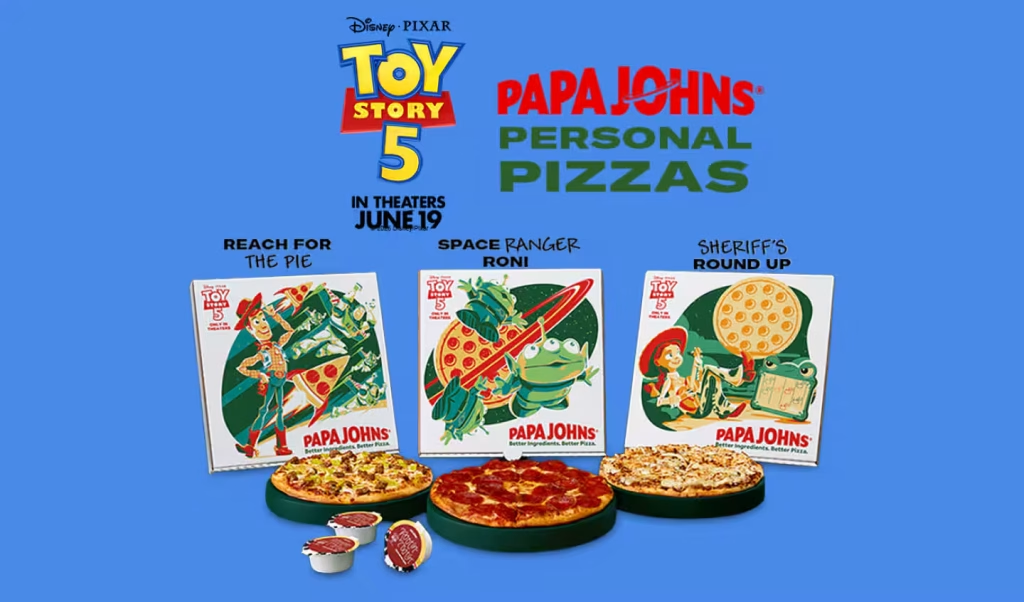
    The new Personal Pizzas from Papa Johns are a great addition to our menu. Three specialties are offered: Sheriffs Round up, Space Ranger-Roni, and Reach for the Pie! They can also be customized with any sauce or toppings. There are three new Toy Story 5 themed boxes with limited time prints. Don’t forget about the Rootin Tootin Ranch!

    Image From https://www.papajohns.com/personal-pizza/

    Filmed at the Papa Johns in Chatham Heights. The constant humming of the ovens combined with the smell of baked dough and cheese makes for an unforgettable atmosphere. The heavy foot traffic in the area means that these quick personal pizzas fly out the door. Our friendly staff will help get the order made and out the door.

    Be sure to stop by and grab yourself a Personal Pizza! Each one made to perfection with care. On sale for a limited time for $8.99 at participating stores.

  • Blooper Reel

    Bloopers are an essential part to every piece of video media. I don’t think I have ever recorded myself to make a video like this so there were quite a few mistakes. It was also insanely hot in the store this day.

    Filmed at the Papa Johns in Chatham Heights. This was late night after the recent storms and our air conditioning went out. The flour gets sticky and the dough starts to get wet. Everything starts to get wet. Condensation aside, the personal pizza turned out perfectly as always.

    Looking back on the assignment, I would have prepared a script instead of just winging it. I had a lot of bloopers for my commercial because it was improvised. I learned that creating video media takes time and planning to end up with an effective product.

  • Tell Your Character’s Story

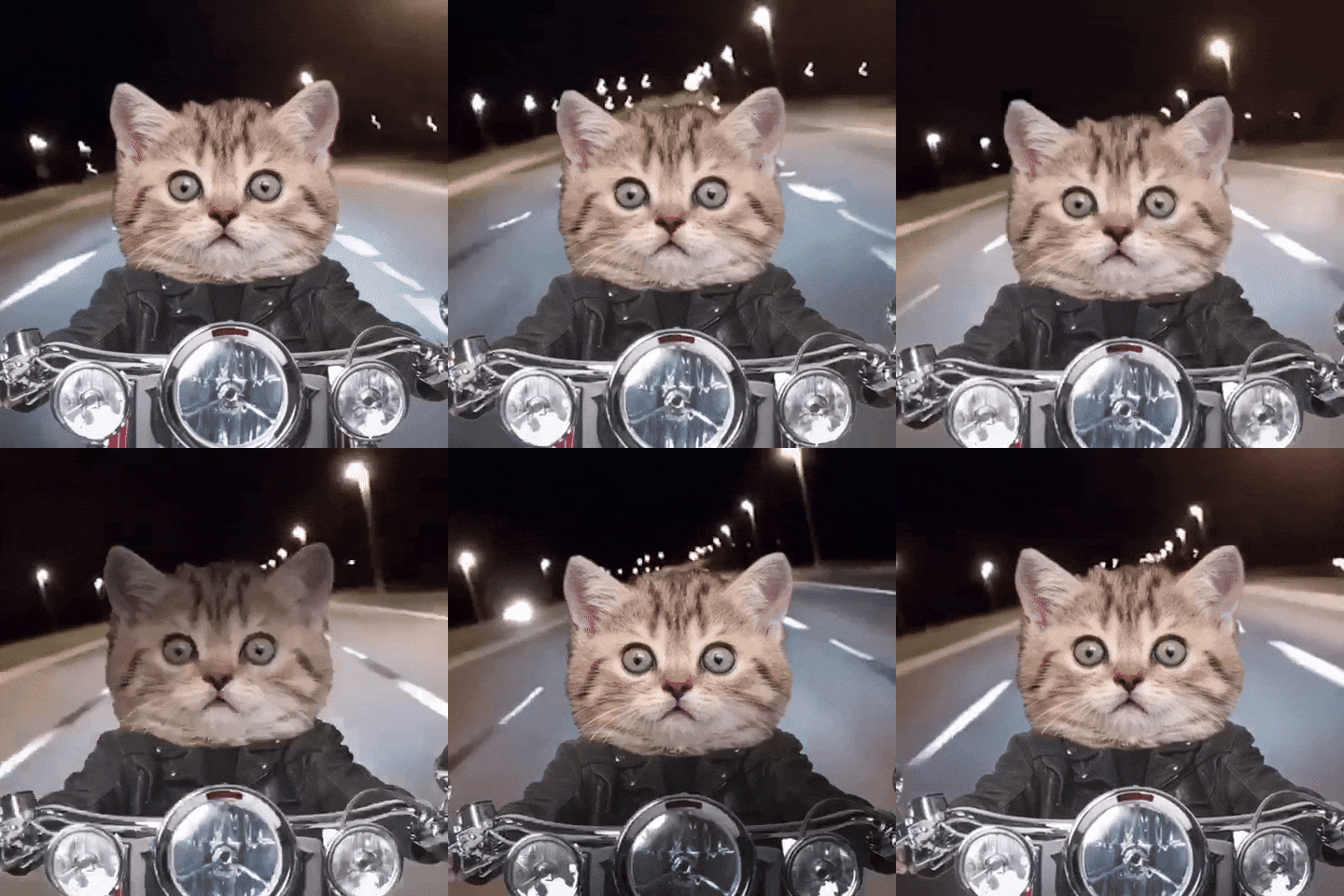
    The Midnight Rider needs no introduction at this point. Typically found, or should I say heard, riding the streets after dark on his way home from work. However, the Midnight Rider still rides for fun. He and his crew get out to enjoy the sun and the breeze any chance they get. Today it was just him and P Long hitting the road.

    Snapchat-699981420
    Image of The Midnight Rider

    We ride through the backroads of Stafford and Hartwood. We feel the sidewall of the tires on every twist and turn we make. It was about 90 degrees outside and the sun was beaming down onto us. However, with all of our vents open and acting like a wind tunnel, we stay cool as long as we don’t have to come to a stop.

    Music by Frequency

    The Midnight Rider Learned he needs to slow down and enjoy the little things in life. Riding home from work at night is definitely different. The night rides start to feel like a necessity. However, the leisure rides feel like an escape from reality and all of its problems. The random daytime rides get more and more rare as life goes on and people get busy. As long as there are two wheels down on the right side of the pavement, everything will be alright.

  • Look, Listen, Analyze

    Watching the scene from the 2003 Hulk movie with visuals only was certainly different. The scene starts with Eric Bana as Bruce in the bathroom shaving his face. It is a close up shot of the razer gliding across his neck. The shot switches and is now looking from behind him as he starts to wipe the foggy mirror. Bruce sees something in the mirror and leans in for a closer look. The camera cuts to the to have the same angle behind Hulk, who is in the mirror looking back at Bruce and mimicking his movement of wiping the mirror. It cuts back to the view behind Bruce when Hulk busts through the mirror, grabs Bruce, says something, and then pulls him into a blue void behind the mirror.

    The scene was easy to follow the second time with the screen off and the sound on. There is soft background music. The razor can be heard scraping Bruce’s face. The music goes quiet and a faint squeak can be heard from the mirror. There are some eerie sounds with a low growl before the sound of broken glass. A deep Hulk voice says, “puny human” followed by a woosh and another glass breaking sound.

    When putting it all together, I see many of the filmmaking techniques being demonstrated in this clip. One of the main ones that I notices was the placement of the characters on screen. Following the ideas presented in Ebert’s essay, Bruce is on the right side of the screen and the Hulk is on the left because Hulk is being portrayed negatively in this scene. Even when the camera flips to the other side of the mirror, Hulk is still on the left side of the shot.

    Another technique that I noticed is the one point perspective that was showcased in the Kubrick compilation. The shot is behind the back and looking at the mirror. It switches between being behind Bruce and Hulk’s back. Switching between characters with the same shot on them is an interesting choice because it reinforces that Hulk and Bruce are the same person. Bruce is having an internal conflict with himself.

  • Audio Unit Summary

    I learned a lot about audio storytelling during this week. Similar to last week, the beginning of the unit was a great refresher to the audio specific vocab and concepts. I have always known about things like pacing, sound effects, and layering. Reading all of the sources in this unit really explained the impact that those audio techniques have on the overall story being told. The videos from Ira Glass had great information about the major parts to a story. My reflection goes into more details about his explanations on what makes a good story.

    This unit ended up going pretty smoothly so it was hard to think about something that was harder than expected. The closest thing to being hard was the Sounds of My Day assignment because I had to capture all of that audio while still trying to do my job. I had to plan out exactly when I could take the recordings and do it quickly so I could stay on task at work. Some of the sounds, like the phone ringing and the well done timer, were quick grabs because they happened unexpectedly.

    Doing the hands on audio editing was easier than expected. I already had the hardware and software to record instruments and edit audio. However, it has been a very long time since I have used any of it because nothing like it has even been required for class until now. I was surprised that I was able to get back into it this quickly and create some things that I am pretty proud of like the Eat Your Heart Out Beethoven assignment.

    Another thing that was easier than expected was part three of this unit. After reading all of the information earlier in the unit, being able to spot the audio techniques in the the podcast was pretty easy. Maybe the spooked podcast is just really efficient at using those techniques as explained in the podcast reflection. Glynn Washington was very deliberate with his audio techniques, so it made them pretty easy to pick out when listening.

    The thing that drove me crazy was also the thing I enjoyed the most about the audio unit. The Spooky Season assignment took me a lot of time and drove me a little nuts because I was trying to get it perfect. Listening to all of those sounds over and over in my headphones made it so I kept hearing them even after I took the headphones off. I really did enjoy being able to play my bass again to make something that sounds spooky and unique. These assignments gave me an excuse to go play with all of my toys.

  • Sounds of My Day

    My day doesn’t really start until I get to work, and there are an infinite amount of sounds that I hear every single day. Starting off with the door chime. Every time I get to work and every single time a customer walks in I hear the dreaded beep. The beep that means I need to drop everything and put a smile on my face to go help a customer. After the customer places their order, it is time to make their pizza. This comes with the droning sound of the spinner, the crashing of the screens and docker, and the banging of the makeline as it gets opened and shut throughout the shift.

    Once the pizzas are done, the ear piercing timer goes off to let every employee in the store and the units on either side of us know that there is something coming out of the oven. Speaking of the oven, that is the constant rumble that can be heard in the background of every sound that was recorded in the store. After spending enough time in the store it starts to get blocked out. The pizza peel makes a distinct clash when making contact with the oven conveyor and then when it gets set down on the polished aluminum cut table.

    The most satisfying sound in the store is when the stickers get torn off the label printer to go onto the boxes. The perforated lines rip perfectly and make a crispy sound. The most unsatisfying sound however is when the phone rings. Nothing good comes from a store phone call. A driver took the wrong order or can’t get in contact with the customer, or the call center placed a customers order incorrectly and they call me to make edits. It always seems to happen right in the middle of a rush. My night always ends with the same few sounds. Before I actually leave, I hear the safe closing and the door chime one last time. To end it all off, I hear the sound of whatever vehicle I decided to take that day fire up and come to life to carry me home for the night.

  • Podcast Reflection

    Video being reflected on by Spooked Podcast

    The story begins with a description of the cold wilderness that the main character is living in. It describes an eirie feeling and that the main character gets prepared to leave the trailer and go out into the cold and snowy woods. The main character challenges himself to move as quietly as possible through the snow until he hears something else outside with him. The character sees a deer that is described to be a once in a lifetime find, but something about it doesn’t seem right. The deer is eating a rabbit, which is not normal because deer only eat plants. The main character starts to run as he gets chased by the deer until he finds himself back at the trailer and stops right in front of it. He listens, then turns around and goes back into the woods as the story ends.

    Glynn Washington, the host of the Spooked Podcast, uses many of the audio techniques that are explained in the earlier parts of this unit. The main one that stuck out to me was his pacing of his voice. He speaks slowly and takes a lot of pauses which creates tension and suspense as the story is told. The pauses also make it seem like he is actually telling the events from memory as if they happened. It makes the story seem much more genuine because it takes a second to think about the details of what happened.

    The music and sound effects that are included in the story also contributed to the overall spooky feel of the story. It starts off with some slow jazzy music because there is not a lot of tension at the beginning. However, as the story continues, the music quiets and turns to more suspenseful sound effects. The background effects get more intense as the story does. It peaks as the main character is getting chased. There are sound effects of the monster chasing the main character with spooky suspenseful music. At the end, it is silent except for Washington’s voice because to make the listener focus on the twist ending. The silence after all the dramatic suspenseful sounds makes it seem like there is more to the story but then it comes to an abrupt end.

  • Ira Glass Reflection

    Ira Glass gave a point of view on storytelling that I’ve never really thought of before. I have always noticed the effects that audio has on a story, but I did not realize the full depth and the importance. The way Glass explained things by using examples was a good way to show the significance of how something is said or heard.

    Ira’s explanation on anecdote is something I’ve never thought about but makes sense when hearing it. He explains that anecdote is just a series of actions strung together to make a story. That didn’t make a lot of sense to me until Glass gave an example, and then it clicked. He told a story that had no purpose, plot, or really any meaning at all. However, Glass told it in a way that keeps the listener hooked because of the descriptive words he used along with the speed and intonation.

    Another main part of storytelling that Glass explains is the moment of reflection. Good stories need both anecdote and reflection for them to have good meaning. Many stories have great anecdote, but it means nothing because there is either weak or no reflection at all on the events that took place.

    Glass also had a unique take on finding good stories and what it takes to do so. He explains how failure to find good stories is expected and necessary to be successful. It is trial and error and success by numbers. If you find five bad stories you might get lucky and find one that is good and makes the other five worth it.